Most restaurant owners know their sales. Far fewer know their food cost — the share of each sale that goes on ingredients. When chicken, oil and ghee prices change every few weeks, a menu priced last year may be making far less than you think. And when ingredients disappear through wastage or theft, nobody notices until the month's purchases look strangely high.
What recipe-based stock control means
Each menu item is linked to a recipe: the raw ingredients and quantities it uses. For example, a full chicken karahi might use 1.2 kg chicken, 0.5 kg tomatoes, 0.15 L oil and a set amount of spices. When that dish is sold at the POS, the system deducts those ingredients from stock automatically.
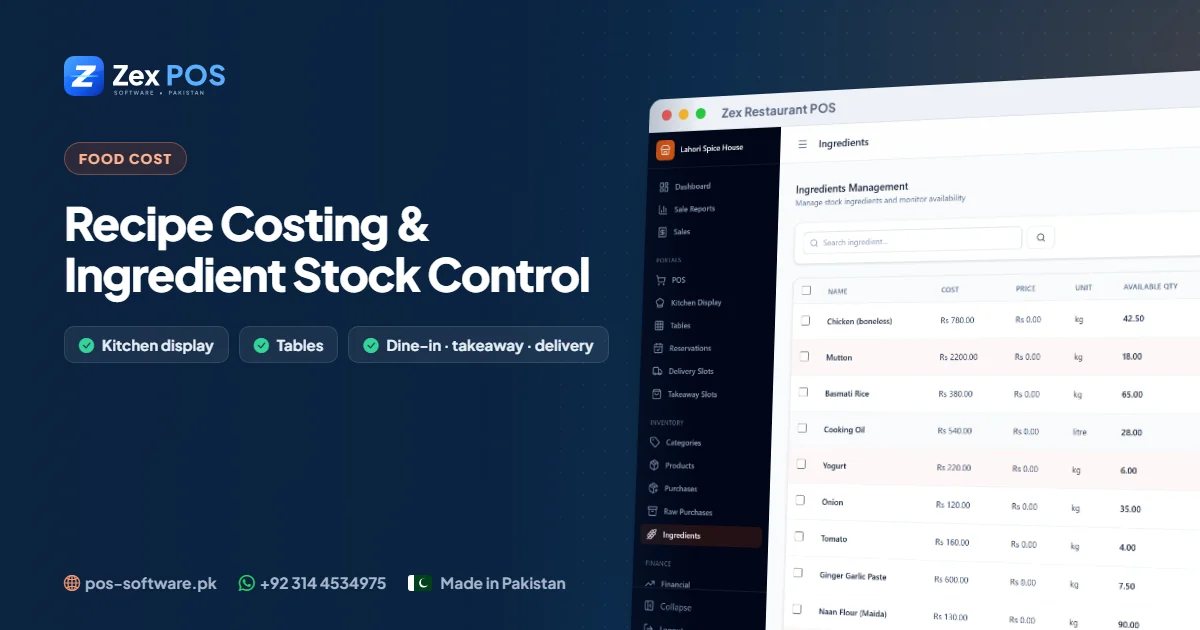
In Zex Restaurant POS, ingredients are managed separately from menu items, and ingredient purchases from suppliers add to raw stock. The result is a running figure for what should be in your store.
Step 1: Build your ingredient list
Add every raw material you buy: meats, vegetables, oil, rice, flour, dairy, spices, packaging. Use the unit you actually measure in (kg, litre, piece). The ingredient list can be exported for review.
Step 2: Write recipes for your best-sellers first
You don't need every dish on day one. Start with the 10–15 items that make most of your sales. Weigh the ingredients in a real portion — don't guess. Ask the head cook to prepare the dish while someone notes the quantities.
Step 3: Record purchases as they arrive
Every delivery from a supplier — chicken from the poultry shop, vegetables from the mandi — should be entered as a raw purchase. This keeps ingredient stock current and builds a record of what you pay.
Step 4: Compare "should have" with "do have"
Once a week, physically check your key ingredients and compare with the stock in the system:
| Ingredient | System stock | Actual count | Difference |
|---|---|---|---|
| Chicken | 18.4 kg | 15.0 kg | −3.4 kg |
| Cooking oil | 12.0 L | 11.5 L | −0.5 L |
| Rice | 40 kg | 39 kg | −1 kg |
Small differences are normal. Large, repeated differences point to over-portioning, wastage, wrong recipes — or theft.
Step 5: Work out food cost per dish
With recipe quantities and purchase prices, food cost is simple arithmetic:
Food cost % = ingredient cost of one portion ÷ menu price × 100
Many restaurants aim to keep food cost roughly in the 30–40% range, depending on the cuisine and format. Dishes far above your target need a price review or a recipe change.
Common leaks this uncovers
- Over-portioning — generous hands on meat and ghee
- Wastage — prepped food thrown away at closing
- Unrecorded staff meals
- Supplier short weight — compare received quantity with the invoice
Keep it sustainable
Recipe costing only works if purchases are entered every day and recipes are updated when the kitchen changes a dish. Make one person responsible for each, and review the numbers weekly.
Read the complete restaurant POS guide, or see recipe costing live on WhatsApp.

Waqas Ali
Waqas ALi
My name is Waqas ali im currently working as software developer in different Field