An agri-input shop in Punjab or Sindh looks simple from outside: shelves of bottles and bags, a counter, and farmers coming in before every spray. Inside, it is one of the most complex retail businesses in Pakistan. Demand jumps with the season, products expire, most farmers buy on credit until harvest, and distributors expect payments in instalments. A notebook can't keep up — pesticide dealer software can.
1. Stock that matches the shelf
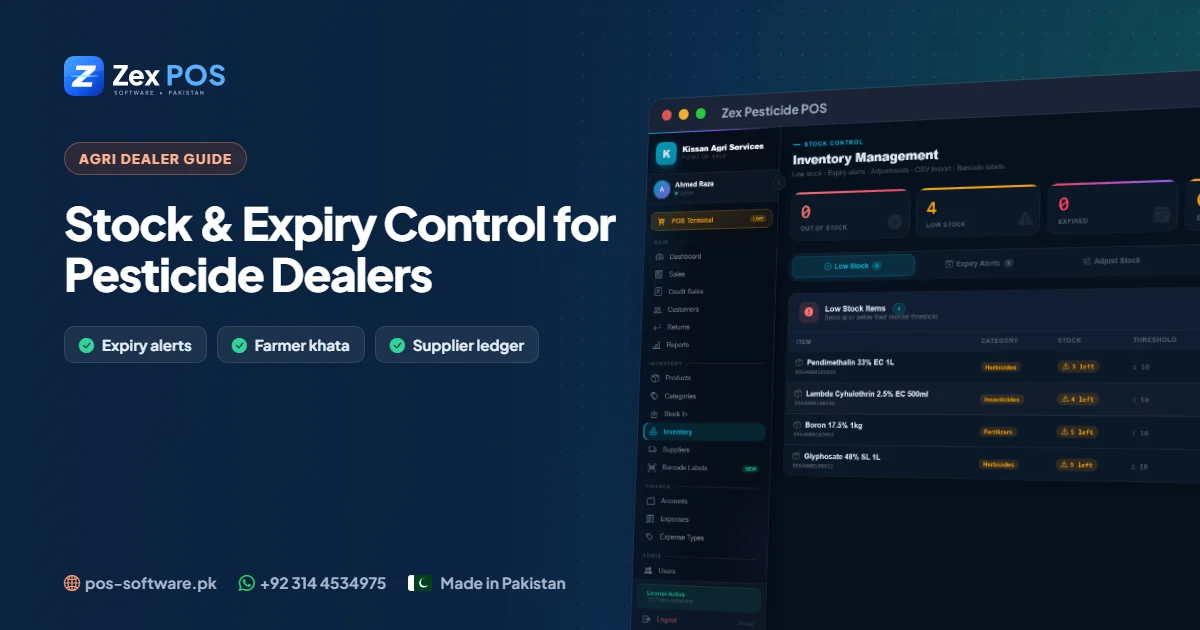
When billing and purchases happen in the same system, stock updates itself. Every sale reduces it and every purchase increases it. You can see at any moment how many bottles of each product you should have, and the value of stock on hand.
- Units that suit agri products — litre, ml, kg, bag, bottle, packet
- Categories such as insecticides, herbicides, fungicides, fertilizers and seeds
- Low-stock alerts based on a reorder level you set per product
- Barcode or short-code search for fast billing in the rush season
2. Expiry dates: protect your margin
Expired pesticide is a direct loss, and selling it damages your relationship with farmers. In Zex Pesticide POS, you save an expiry date with each product and see it on the stock list, so short-dated stock stands out. A simple weekly routine works well:
- Every Monday, review products expiring in the next 60–90 days.
- Move them to the front of the shelf and tell your salesmen to sell them first.
- For slow movers, talk to the distributor about a return or exchange before expiry.
3. Retail and wholesale prices on every product
Many dealers sell to farmers at retail and to smaller sub-dealers at wholesale. Keeping two prices in your head leads to mistakes. Store a retail price and a wholesale price on each item so the counter always charges correctly.
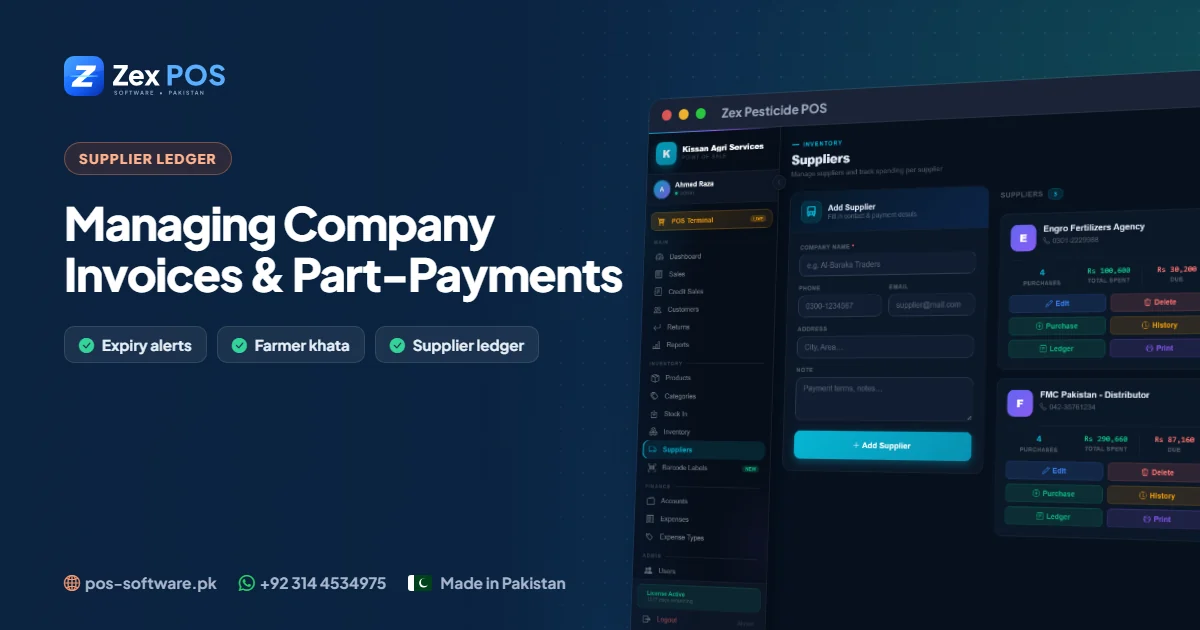
4. Distributor invoices and part-payments
Agri companies and distributors usually deliver on credit, and you pay through the season. The software should let you record each purchase invoice with the supplier and invoice number, then add payments against it as you make them — from cash, bank or a mobile wallet account. The supplier ledger then shows exactly what you still owe, and you can print a statement before every settlement meeting.
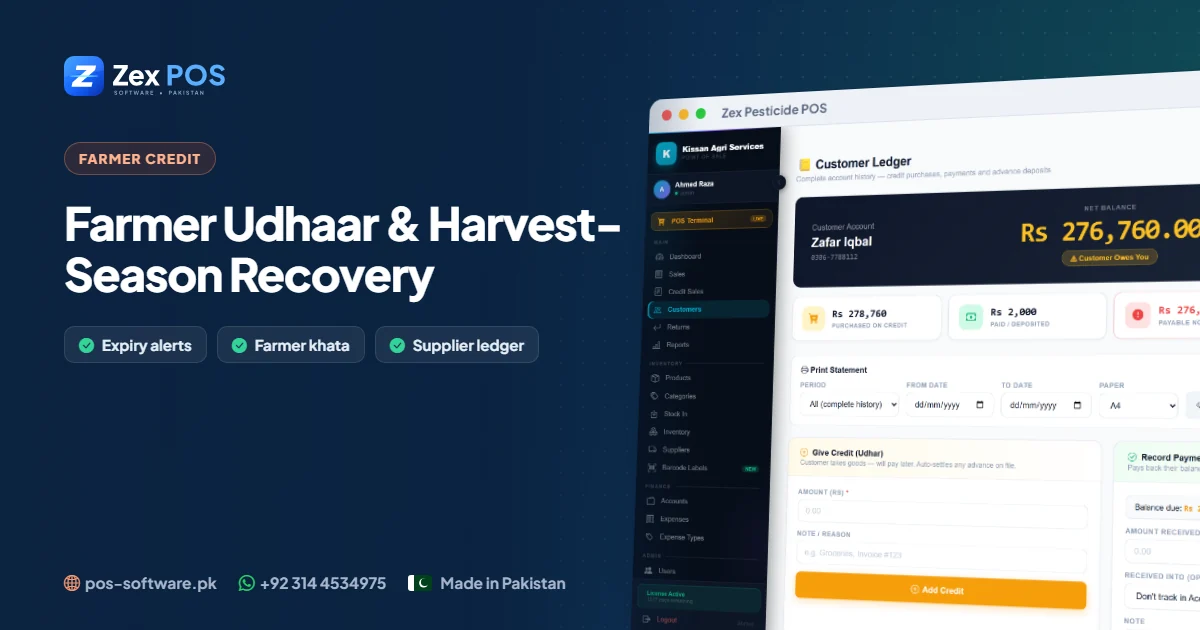
5. Farmer credit (khata)
Credit is the backbone of the agri business. Every credit sale should go straight into the farmer's khata, with notes and part payments recorded as they happen. We cover this in detail in our guide to farmer udhaar and harvest-season recovery.
6. Accounts, expenses and reports
Separate accounts for your cash drawer, bank and wallets — with statements for each — make it easy to see where money is. Record expenses such as rent, labour, transport and electricity by type. Item-wise and transaction reports, printable on A4, show what sells, what earns profit and how the season compares.
7. Control and safety
- Users & permissions: salesmen see only what they need
- Activity log: who changed a price or deleted a bill, and when
- Recycle bin: restore records deleted by mistake
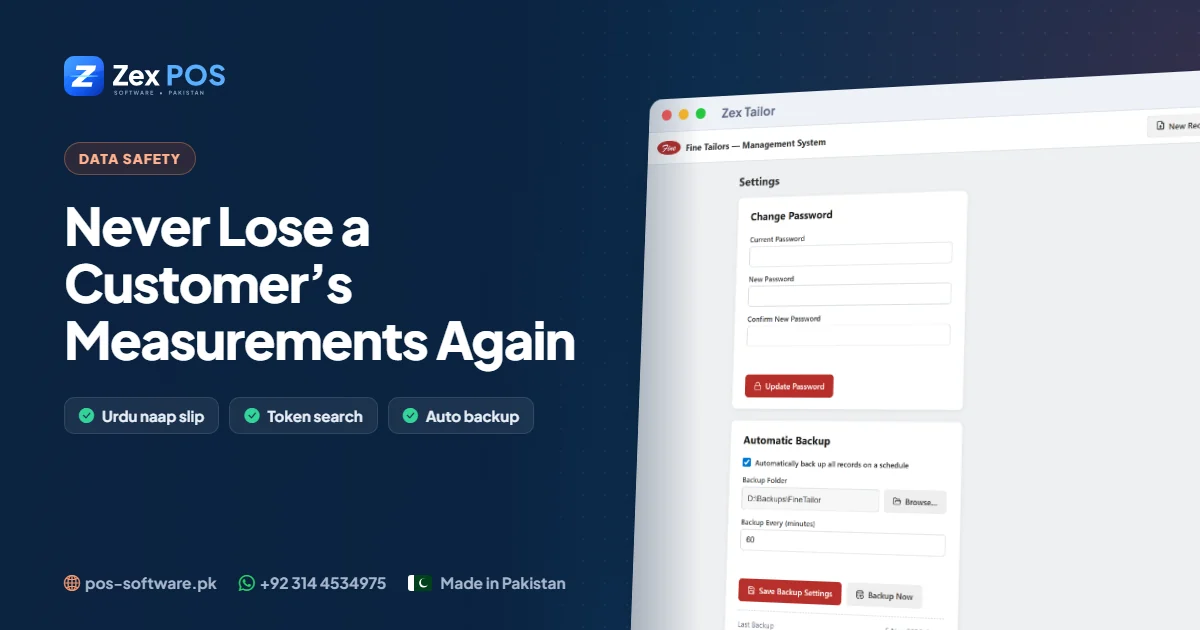
- Backups: copy your database to a USB drive regularly
- Offline: the desktop application keeps working during load-shedding or internet outages
Paper vs software at a glance
| Task | Paper register | Zex Pesticide POS |
|---|---|---|
| Stock on hand | Manual count | Updated with every sale & purchase |
| Expiry | Checked by eye | Saved per product, shown on stock list |
| Farmer balance | Add up pages | Always current, printable statement |
| Distributor payable | Separate diary | Supplier ledger with part-payments |
| Who changed what | Unknown | Activity log |
Frequently asked questions
Does it need internet?
No. It is a Windows desktop application that works offline after a one-time activation.
Can I use it for fertilizer and seed too?
Yes. It works for any agri input — pesticides, fertilizers (khad), seeds (beej) and related products.
Get a demo
See every feature on the pesticide dealer software page or book a free demo on WhatsApp (+92 314 4534975).

Waqas Ali
Waqas ALi
My name is Waqas ali im currently working as software developer in different Field