In the weeks before Eid, a busy tailor shop can have hundreds of suits in progress at once. The only thing holding it together is the slip: a token number, the customer's measurements and the name of the karigar stitching it. When the slip system works, the rush is manageable. When it doesn't, suits go to the wrong karigar, measurements are misread, and customers wait.
What goes on a naap slip
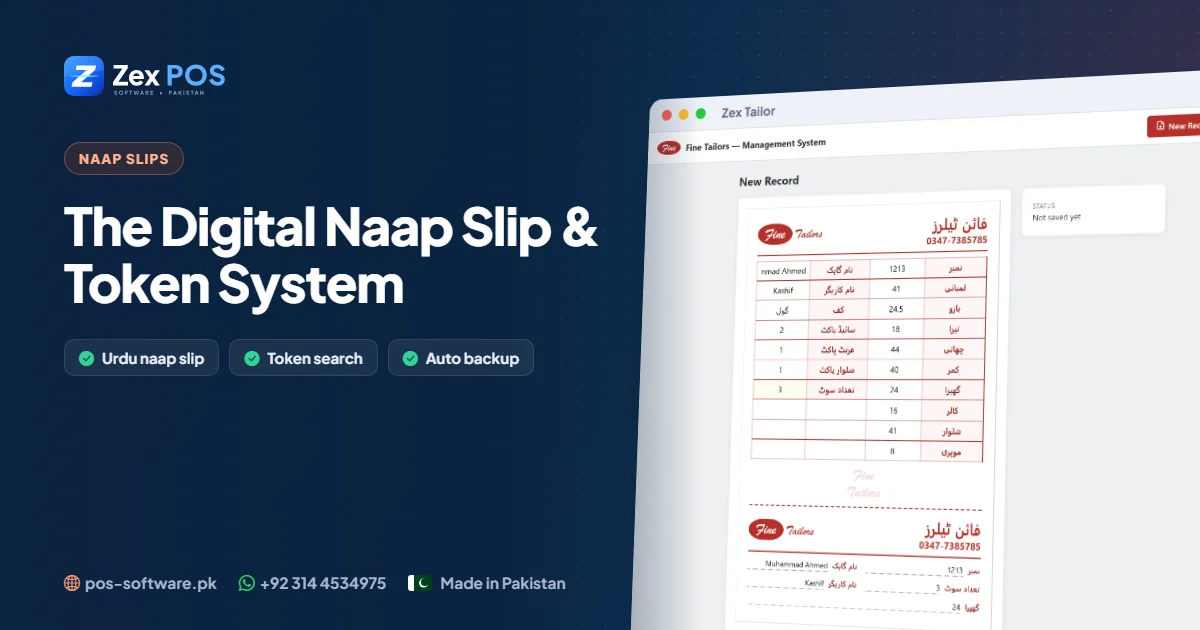
A standard shalwar kameez slip in Pakistan carries:
| Urdu | Meaning |
|---|---|
| نمبر | Token number |
| نام گاہک / نام کاریگر | Customer name / karigar name |
| لمبائی، بازو، تیرا | Length, sleeve, tera (shoulder) |
| چھاتی، کمر، گھیرا | Chest, waist, ghera (hem width) |
| کالر، کف | Collar, cuff |
| شلوار، موہری | Shalwar length, mohri (bottom opening) |
| سائیڈ پاکٹ، فرنٹ پاکٹ، شلوار پاکٹ | Side, front and shalwar pockets |
| تعداد سوٹ | Number of suits |
Zex Tailor uses exactly these fields, in this Urdu layout, so the digital slip looks like the one your shop already uses.
Why the token number matters
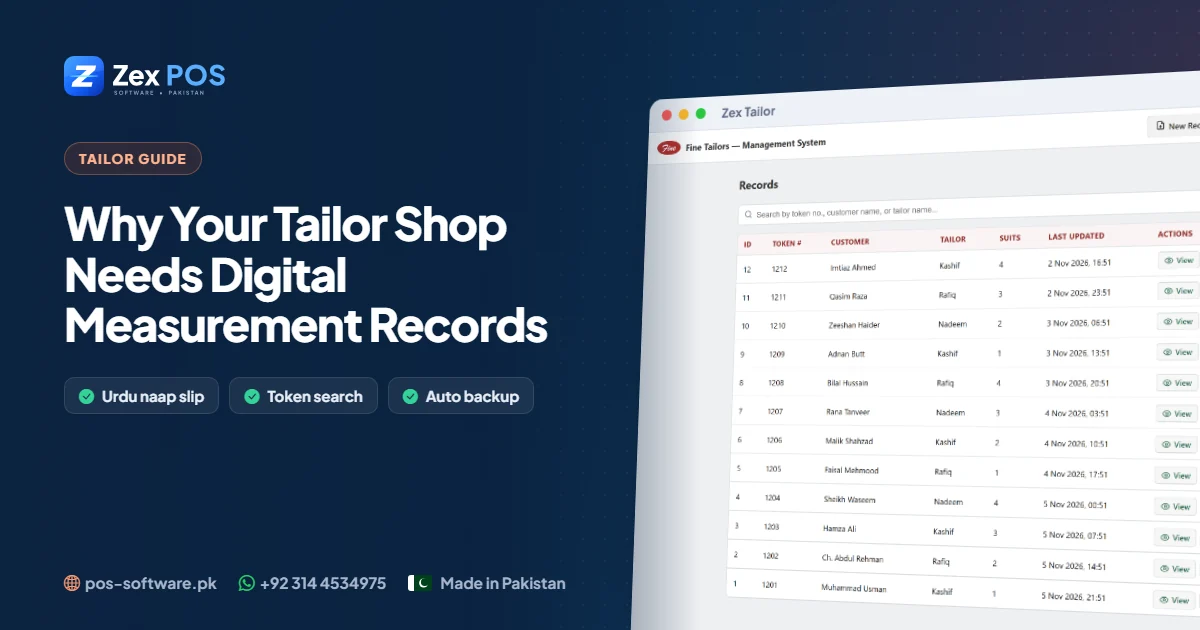
The token number is the key that links everything: the customer's copy, the slip that goes with the cloth, and the record in the computer. When a customer returns with their token, the counter types the number and the full record appears — measurements, karigar and number of suits.
Zex Tailor prints a duplicate token slip along with the main slip, so the customer always leaves with their token.
Assigning the karigar
Recording the karigar's name on every slip answers two daily questions instantly:
- Who is stitching this suit? — search by token.
- What is this karigar working on? — search by karigar name.
Before Eid, this makes it easy to see who is overloaded and rebalance work.
Printing exactly like paper
Karigars are used to a particular slip format. Zex Tailor prints the record using the same template as the screen, sized to your slip paper, so nothing about their routine changes — except that the handwriting is now perfectly clear.
A simple counter routine
- Customer arrives — search by name. If found, confirm or update measurements; if not, create a new record.
- Enter karigar name and number of suits.
- Save and print — the slip goes with the cloth, the token copy goes with the customer.
- If measurements change later, edit the record; the last-updated time and user are recorded automatically.
During the Eid rush
- Use token numbers in strict sequence so nothing is skipped.
- Search by karigar each morning to check workloads.
- Reprint any lost slip in one click — the record is never lost with it.
Read why measurements belong in software, or see the naap slip live on WhatsApp.
Waqas Ali
Waqas ALi
My name is Waqas ali im currently working as software developer in different Field